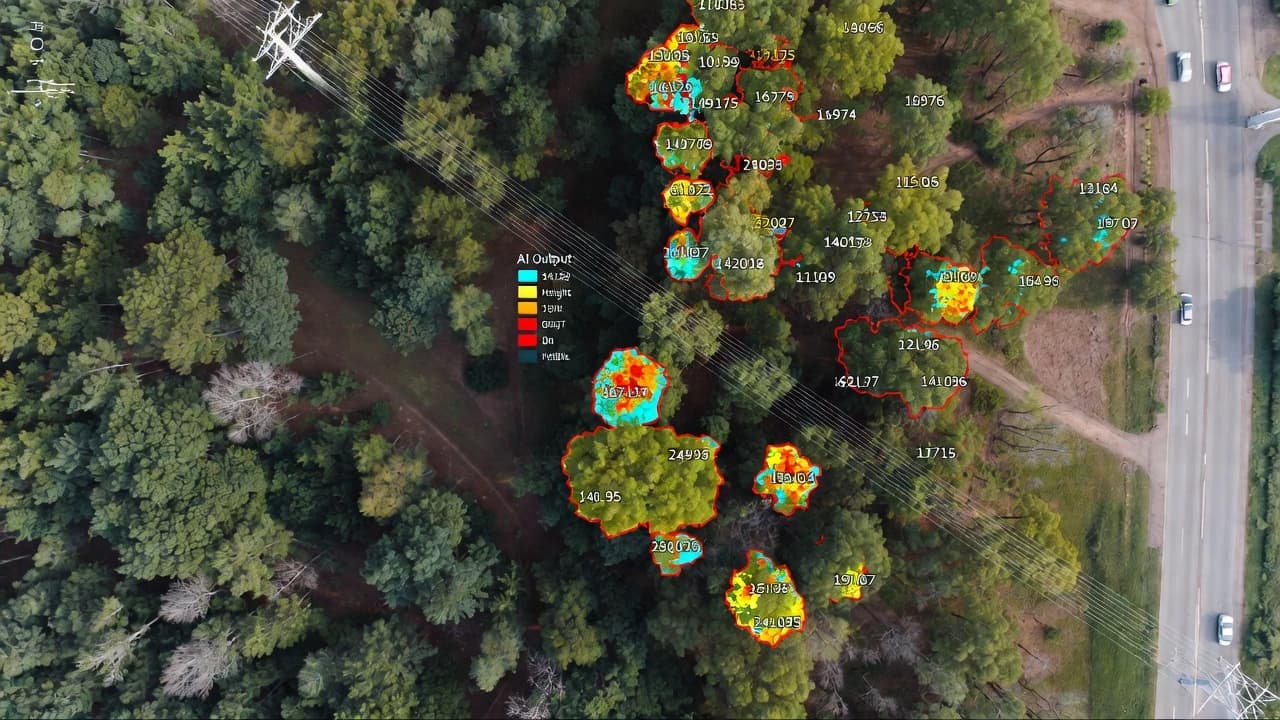
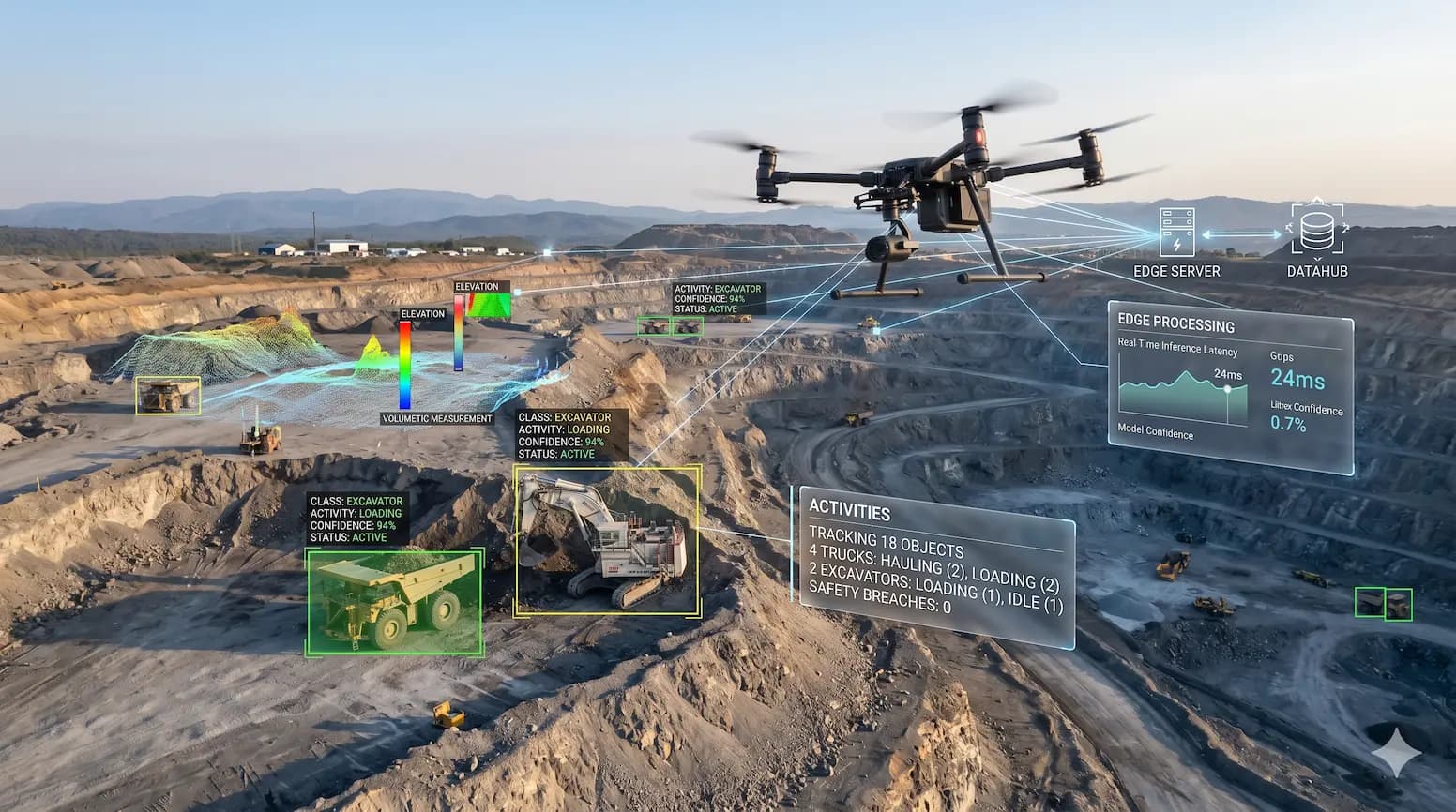
Two-tier computer-vision platform for portfolio-scale property intelligence. A satellite classifier sorts whole roofs into five construction types; a higher-precision aerial pipeline runs Mask R-CNN instance segmentation and pixel-accurate damage detection on each building. Engineered for elastic load across multi-million-property workloads, surfacing every finding as a parcel-level report.
The Challenge
Insurance, property-management, and due-diligence teams need building-level condition data — roof type, damage state, parcel address — across portfolios that run into the millions. Two imagery regimes carry different parts of the answer: satellite is broad but coarse, aerial is precise but voluminous. Any production AI system has to bridge both, deduplicate the same roof seen from multiple passes, ignore non-building objects, resolve every detection to a real address, and stay elastic under enterprise upload volumes.
Our Approach
Two-tier architecture, each tier matched to its imagery. The satellite tier classifies whole roofs into five construction categories — broad triage that lets the platform reason about a portfolio at a glance. The aerial tier is higher precision: Mask R-CNN with a ResNet-101 backbone instance-segments individual roofs, and a second Mask R-CNN model localizes damage at pixel precision over each cropped, deduplicated building. We benchmarked against UNet and lighter backbones; transfer learning from large public aerial corpora bootstrapped both tiers, followed by ten-plus retraining cycles on a hand-curated annotation set. Around the models: deduplication, area filtering that lifts precision and recall to 93% and 91%, an interactive map UI for per-area reports, and a managed serverless backend that scales across multi-million-property workloads.
Results
Raw imagery in, per-property intelligence out — every structure typed at the satellite tier, instance-segmented and damage-classified at the aerial tier, deduplicated and address-resolved. Detection holds at 93% precision and 91% recall across geographically diverse captures, and the serverless architecture scales to portfolios in the multi-millions. Built deliberately before the generative-AI wave, the system shows what disciplined classical computer vision and ML engineering deliver at enterprise scale — and the architecture transfers directly to insurance triage, due-diligence reports, portfolio monitoring, and post-event damage assessment.